
Enlightened Atheists

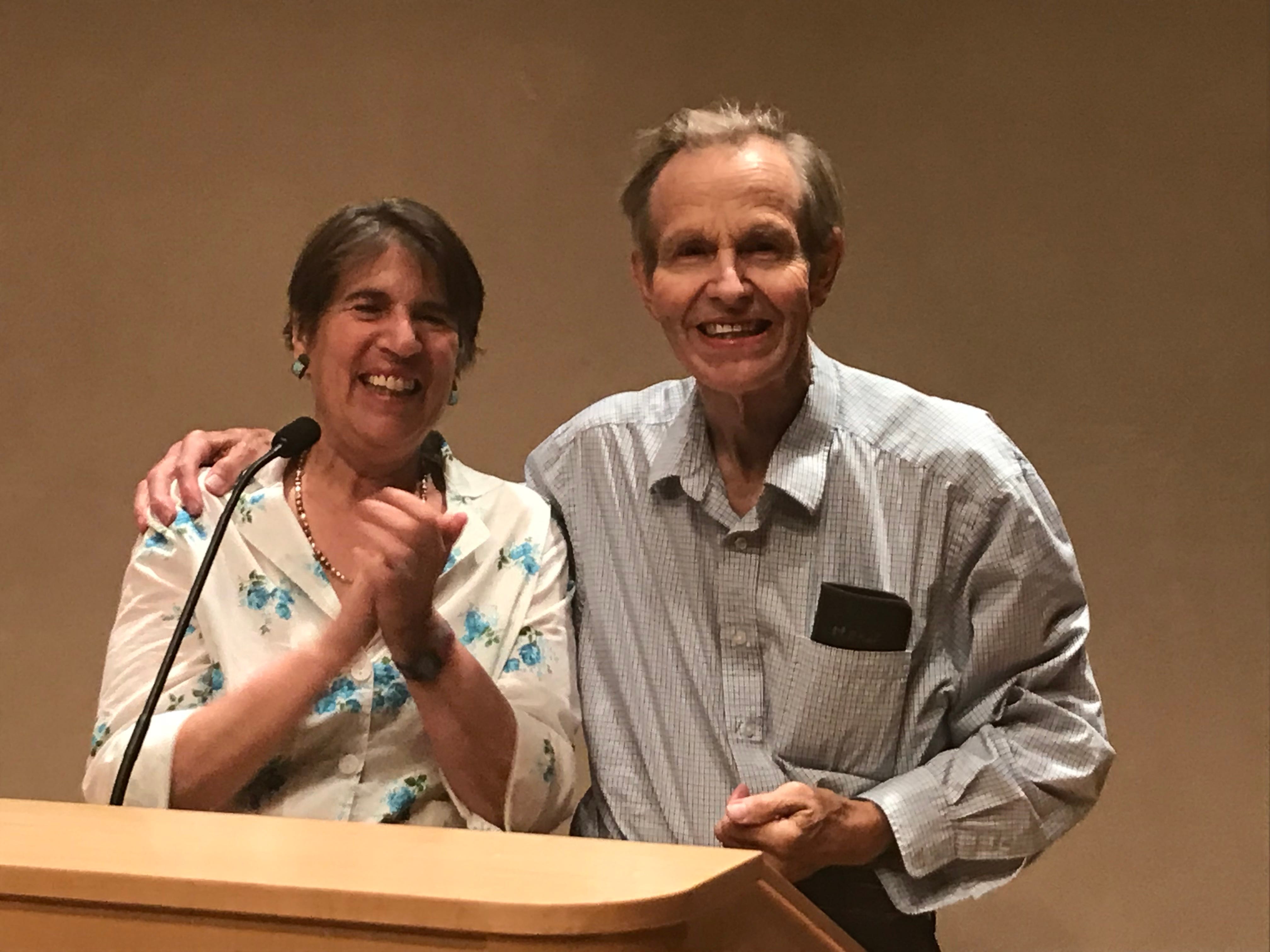
When I was teaching Religious Studies at the University of New Mexico in Taos, I often brought in guest speakers to enhance my students’ experience of multiple faith traditions. One day, I decided to invite the late great author and activist, John Nichols. It was unusual for at least a couple of reasons: one, John was pretty much a recluse and rarely appeared in public; and two, it was a course in Christian Scriptures, and John was an atheist.
Sometimes I think I am, too. What I mean, of course, is that the God many of the friends and writers I respect most reject is not the God I believe in or adore, either. My God does not cast judgment, neither punishes nor rewards, but simply calls me to an ever greater, utterly mysterious, direct encounter with love.
In this sense, there are atheists I know who more fully embody God-like qualities than any self-proclaimed believer. John Nichols was one of them. A passionate voice for human rights over the course of five decades, John had gradually softened into someone who did not merely rage against the injustices of humanity but lived the teachings of love and compassion we find in the great sacred scriptures of the world’s religions. I had watched John’s ego identity—much as I had witnessed Ram Dass’—melt in the warmth of a life lived for the sake of love, until he simply exuded that radiance. Like any saint, John Nichols had become love. I had suspected this from afar for quite some time, but that day I bore witness to it up close, and all I could do was to bow inwardly at his feet.
For twenty years, I was the entire philosophy and religious studies department at my community college. During the last few semesters, I made a point of offering classes that stretched me, and gave my students a wider range of choices. In my naivete, I thought a course in Christian Scriptures was a great fit. After all, I had been translating the Christian mystics for years, and had steeped myself in the biblical teachings that inform their visionary wisdom. What I didn’t anticipate was that my class would fill with fundamentalists who were much more interested in testifying to one another and preaching to me than in exploring the socio-political, historical, and archetypal context for these sacred writings--in other words, engaging in critical thinking (with an open heart). In fact, they did not, for the most part, have the slightest idea what I even meant when I talked about inquiry.
So I was really curious to see how my atheist friend, John Nichols, might rock the boat when he came to visit. The reason I invited John (you might be wondering) was because we were discussing Christ’s Sermon on the Mount — which comprises the majority of his teachings on social justice, compassion, and forgiveness — and tying this into Liberation Theology. I had discovered at my friend Sean Murphy’s birthday party a few days before, while sitting next to John Nichols at dinner, that John had been very involved in the Sanctuary Movement of the early 1980’s (I had too, as an interpreter for Salvadoran refugees). He had spent time in Central America, and had been deeply impressed by the powerful faith of the people, and how their religious beliefs were inextricably entwined with their revolutionary activities. My academic side (angel) thought his stories would be illuminating for my students. My rebel nature (demon) may have been hoping to provoke them into a more liberal state of consciousness….
As it turned out, my radical activist friend did nothing to shake up or in any way offend my conservative students. Instead, he told wonderfully engaging stories of his own adventures, and in the end connected it all to what is most beautiful and liberating about the teachings of their beloved Jesus. They were totally captivated. And so was I. And all the while, John exuded this lovingkindness, humility, and wonderment in the face of the human condition. His visit changed something deep inside all of us. That is enlightenment. That is radical and revolutionary action. I was the one broken free of my prejudices and preconceptions. At the feet of an atheist, I caught a glimpse of God.
I am thrilled to share that a new edition of my book GOD OF LOVE will be coming out on September 8, with updated language and concepts, a daring new preface by me, and a funny and moving introduction by legendary priest Greg Boyle (founder of Homeboy Industries in Los Angeles). Monkfish has helped give this interspiritual classic vibrant new life. There is an audiobook version too, which I read myself, except for Greg’s intro, read by my talented brother Roy.
These posts are free, but you are welcome to upgrade to a paid subscription to support my work.
This is beautiful because it refuses the lazy line between believer and unbeliever. Some people deny the God I also do not believe in: the punishing idol, the tribal mascot, the cosmic accountant. And some people who say they do not believe in God still become radiant with mercy, humility, courage, and love.
That is the part that matters to me. The name on the outside can lie. The heart reveals more. If someone becomes kinder, freer, less possessed by the nafs, more willing to stand with the vulnerable and live for love, then something holy is moving there, whether they use our language for it or not. Sometimes the atheist is the one who reminds the believer what God looks like when love becomes embodied.
Thank you for this beautiful story, and for introducing me to John through your words. Uplifting and inspiring. Much gratitude.